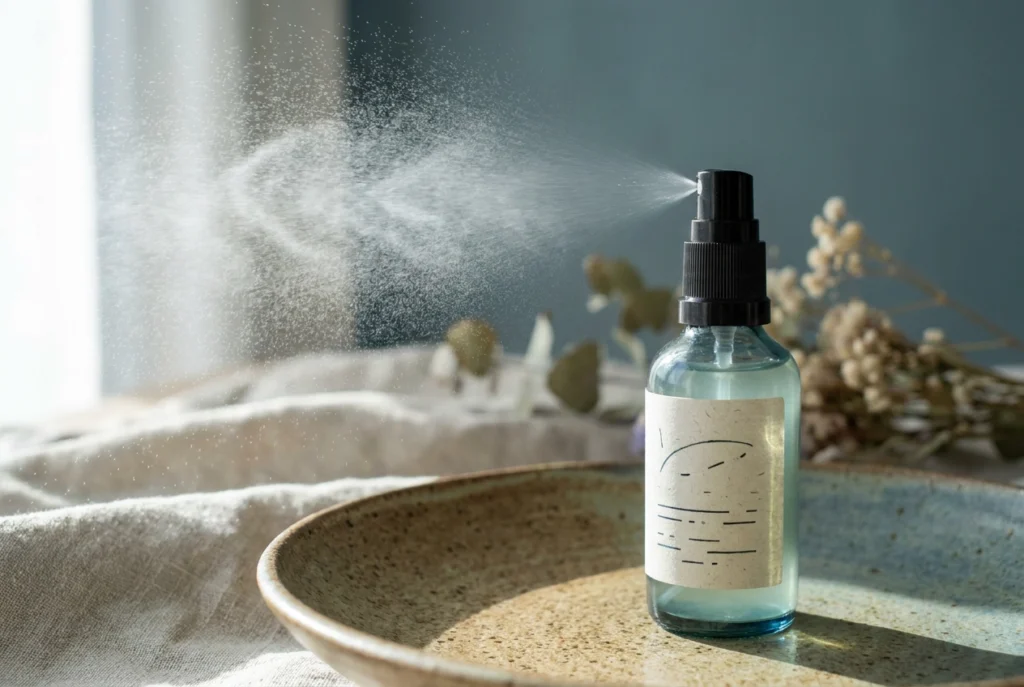
Let’s be honest: if you have ever sprayed a hydrating facial mist on your face and wondered whether you just paid for fancy water, you are not alone. The doubt is fair. A quick spritz can feel refreshing, but does it actually do anything for your skin? The answer is more useful than a simple yes or no. A hydrating facial mist is not a gimmick. It just has a specific job, and it works best when you understand where it fits.
In this tutorial, we will look at why skepticism makes sense, what a facial mist hydrating step actually does, and how to use one on damp skin after cleansing. We will also cover midday barrier support for reactive skin, misting after actives to calm retinoid or acid flare-ups, and what a hydrating facial mist cannot replace, like moisturiser or SPF. You will learn where Epicutis Hydrobiome Mist fits in a corrective routine, how to match a mist to your skin concern, and how to apply it so it earns its place. By the end, you will know whether this step deserves space in your routine.
Why It Is Fair to Doubt a Face Mist
A bottle of water that evaporates off your face in thirty seconds does not sound like skincare. That instinct is fair, and worth respecting rather than dismissing. Here is the honest line between a mist and a moisturizer. A mist adds water to the skin’s surface. A moisturizer adds water plus the lipids and occlusive agents that slow that water from leaving. In 2026, barrier hydration research still centers on leave-on moisturizers, fluids, and protectants, not facial mists. So any claim for a hydrating facial mist has to be framed as mechanism and sensible use, not proven outcome. Much of the cynicism comes from marketing that sells a soothing facial mist as a cure-all for dullness, pores, and aging at once. No single step can meet that. This piece promises three moments a mist genuinely earns its place, two things it can never replace, and how Epicutis Hydrobiome Mist fits for corrective clients in Dover, NH. You can also shop the mist when you are ready.
What a Facial Mist Hydrating Step Actually Does
You were right to be skeptical, so here is the honest version.
Surface hydration is real. Barrier repair is slower. A mist raises water content in the outermost layers, which is why skin can look plump and calm within a minute. Actual barrier repair takes weeks and depends on lipids, ceramides, and steady moisturizer use.
Water is always leaving. It moves out through skin constantly. How fast depends on barrier health and your environment: humidity, temperature, airflow, and hours spent in heated indoor air. Cold, dry conditions are hard on compromised skin for exactly this reason (Autumn skin barrier repair).
Humidity shifts the math. In humid air, surface water lingers. In dry or air-conditioned rooms it disappears fast and can leave skin feeling tighter than before.
Damp skin is the real benefit. Serums and moisturizers spread better on slightly damp skin, and humectants like glycerin and hyaluronic acid pull water into the upper layers instead of sitting on top.
Read the formula. Look for glycerin, hyaluronic acid, and panthenol for water binding, plus soothing Centella asiatica. Avoid high alcohol and heavy fragrance loads, which undo the purpose.
Know the ceiling. A mist is a delivery and comfort step. It works best as the first layer of your routine, not the last thing you do to your face.
The First Real Job: Mist on Damp Skin After Cleansing
That first-layer logic pays off most in the sixty seconds after cleansing, while skin is still damp. This is the highest-value moment for a hydrating facial mist because you are topping up water before it evaporates.
Follow this order: cleanse, mist while damp, treatment serum, moisturizer, and in the morning sunscreen last. Pause twenty to thirty seconds between mist and serum so it can settle.
In a corrective routine, astringent cleansers and prescription or over-the-counter actives can leave skin tight, squeaky, and reactive. Misting first eases that discomfort without adding another active.
Technique: hold the bottle six to eight inches away, close your eyes, use one or two passes, then let it settle. Do not fan or blot it away.
Three common mistakes: misting and letting skin dry completely before serum, misting as a substitute for cleansing at night, and misting after sunscreen in the morning instead of before your routine is complete.
Midday Barrier Support for Reactive Skin
By midafternoon, the hydration you layered on after cleansing has worn off. A hydrating facial mist stops being decorative in a heated office, cold New England air, a long drive with the heater blasting, after exercise flushing, or when rosacea brings that warm, prickly feeling. Dry indoor heat is a known moisture thief, especially in winter (winter indoor skin study).
A soothing facial mist cools the skin surface, dials down the perception of heat and tightness, and adds a small amount of water to a barrier that has been losing it all afternoon. Then do the step most people skip: mist, press it in with clean hands, and tap a thin layer of moisturizer or barrier balm over the top. That seal gives the water something to hold onto.
Skip the seal and repeated wet-dry cycling can leave skin feeling drier than before. More passes do not equal more hydration once surface water starts evaporating. Keep hands clean, hold the bottle away from your face, never share bottles, and stash a travel size in your bag, not a hot car.
Mist After Actives: Calming Retinoid and Acid Flare-Ups
Midday sealing still matters here, but the after-actives moment is its own situation. Tretinoin, retinol, AHA, BHA, and high-strength vitamin C commonly cause stinging, warmth, and tightness, especially in the first weeks, and a cool mist is often the fastest way to take the edge off.
Be honest about what that is: mostly comfort. Cooling water and soothing ingredients reduce how hot and irritated skin feels. That matters more than it sounds, because people who stay comfortable tend to stick with a treatment long enough to see results. Reducing irritation is a documented strategy in retinoid use, not a workaround.
What a mist cannot do: it does not neutralize an acid, reverse a retinoid reaction, or give you permission to keep pushing a product that is clearly damaging your barrier.
So during a reactive stretch, cut active frequency rather than quitting, buffer with moisturizer before and after, mist for comfort, and let skin heal before reintroducing the active.
If acne, rosacea, eczema, or hyperpigmentation keeps flaring despite a sensible routine, that deserves a professional assessment, not another product stacked on top of the irritation.
What a Hydrating Facial Mist Cannot Replace
Comfort is not correction, though, and that distinction matters most here.
Moisturizer. A mist supplies water. It does not supply the lipids, ceramides, and occlusive agents that slow water from leaving your skin, so skipping moisturizer because you misted is the single most common way people end up drier than they started.
Sunscreen. Misting does not replace a broad-spectrum SPF 30 or higher, and it is not a credible way to reapply sunscreen over makeup during the day. Daily protection still needs its own dedicated step.
Treatment serums and actives. The ingredients that actually change hyperpigmentation, acne, fine lines, and texture live in your serums and retinoids. A mist sitting underneath them supports comfort; it does not deliver results.
Cleansing. A mist sprayed over a day of sunscreen, makeup, oil, and sebum does not clean skin. Using it as a freshening substitute for washing at night leaves all of that residue in place.
The wider point: a hydrating facial mist is a support step. What changes your skin over six to twelve months is consistency with the rest of your corrective routine, not the bottle you spritz at lunch.
Where Epicutis Hydrobiome Mist Fits in a Corrective Routine
Now that the limits are clear, placement becomes simple. Use Epicutis Hydrobiome Mist right after cleansing, while skin is still damp, then follow with treatment serums and moisturizer. Midday, when skin feels warm, tight, or reactive, mist again as a calming reset before sealing with moisturizer.
That placement suits barrier-compromised clients especially: rosacea, eczema, post-treatment sensitivity, and the early weeks of a retinoid. In a broader Epicutis routine, the mist keeps skin comfortable and damp for what comes next, while leave-on related products do the barrier and treatment work.
Harley Shayna Skin in downtown Dover, NH, carries Epicutis and can help you layer the mist with your existing corrective products rather than replace them. Just remember: the mist supports your plan, but results come from the actives, moisturizer, and sunscreen you use consistently alongside it.
Matching a Hydrating Facial Mist to Your Skin Concern
Once Epicutis Hydrobiome Mist has a place in your lineup, match how you use it to your main concern.
- Acne-prone skin: Use a lightweight, non-comedogenic hydrating facial mist. Mist before a gel or lotion moisturizer, not under heavy creams, and skip thick oil bases that can sit in pores.
- Rosacea and reactive skin: Choose a soothing facial mist without fragrance or high alcohol. Keep a cooling bottle in the fridge for flare days, and treat it as comfort, not treatment.
- Eczema and chronically dry skin: Mist, then seal immediately with a ceramide-rich moisturizer or balm. Water left to evaporate on compromised skin can deepen tightness.
- Dehydrated skin with fine lines: Mist on damp skin, follow with a humectant serum containing hyaluronic acid or peptides, then moisturizer, so the water has somewhere to go.
- Hyperpigmentation: A mist will not fade pigment. Keep it as a comfort layer while vitamin C, a retinoid, or professional treatment does the real work.
The right match keeps it useful. The right technique makes it count.
How to Apply a Hydrating Facial Mist So It Works
Once you have matched your hydrating facial mist to your concern, the result comes down to technique. Hold the bottle six to eight inches from your face, close your eyes, and use one or two even passes. Stop before skin drips; overspray only evaporates off the surface.
In the morning, mist immediately after cleansing, while skin is still damp, and before serum, moisturizer, and sunscreen. Applying it over finished makeup as your only midday hydration strategy will not deliver the same benefit.
Press the product in gently with clean hands. Wait twenty to thirty seconds before your next layer so the water and humectants can settle into the upper layers.
Twice a day suits most people. Add a midday pass if you are reactive, heated, or stuck in air-conditioning. Spraying every hour adds nothing.
Keep the nozzle clean, never share a bottle, and store it away from direct sun and hot cars so the formula stays stable.
The Bottom Line on Hydrating Facial Mist
With application dialed in, here is the simple truth: a hydrating facial mist is a support step, not a magic one. Mist on damp skin right after cleansing, then let your serum and moisturizer do the heavy lifting on top. Keep a soothing facial mist nearby for midday resets when skin feels warm or tight, and always seal it with moisturizer so that water does not just evaporate. It should never stand in for moisturizer or sunscreen, and it should never excuse pushing an active your barrier is clearly not tolerating. Stick to the basics: cleanse, mist, treat, moisturize, protect. Adjust based on how your skin responds, not by adding more steps. If acne, rosacea, eczema, or hyperpigmentation keeps flaring despite your best efforts, get a plan built for your skin. Book a visit at Harley Shayna Skin in downtown Dover, NH to layer Epicutis Hydrobiome Mist into your corrective routine.
Conclusion
A hydrating facial mist is a support step, not a miracle. It works best on damp skin after cleansing, where it can help prep for serum and moisturizer. A midday mist can soothe reactive, heated, or air-conditioned skin, but it must be sealed in so water does not simply evaporate. It cannot replace moisturizer, sunscreen, or a barrier-friendly active routine. Used correctly, it adds comfort without adding clutter. If you want help fitting Epicutis Hydrobiome Mist into a corrective plan, book a visit at Harley Shayna Skin in downtown Dover, NH. Your best skin comes from consistent basics and smart adjustments, not more steps. Start with one mindful mist today.