If you are booking a corrective facial in Dover, NH, the lowest price on the menu can be the most expensive mistake. A corrective facial is not a one-hour indulgence. It is a treatment decision, especially if you are dealing with acne, rosacea, or another persistent skin concern. The right esthetician does not just cleanse your face and send you home. They consult before treating, explain what they see, and build a plan across visits.
This guide gives you the questions that actually predict results. You will learn why price is the wrong first filter. You will verify the license of both the esthetician and the studio through New Hampshire’s Board of Barbering, Cosmetology and Esthetics. You will ask about training and education. You will evaluate the consultation before anyone touches your face. You will check sanitation standards with your own eyes. You will decide whether a provider treats causes or only cleanses. Finally, you will get a question checklist, red flags, and clear steps for booking a corrective facial in Dover, NH.
Why Price Is the Wrong First Filter
If you are searching for an esthetician in Dover, NH, your first instinct is probably to compare prices. A classic 60 minute facial runs a certain rate, so the cheaper option looks like the smarter one. That number tells you almost nothing about whether your acne, rosacea, or hyperpigmentation will actually improve.
A corrective facial is a treatment plan, not a one-off appointment. Two studios can advertise the same service name and deliver entirely different protocols, products, and results.
Cheap is sometimes cheap for a reason: a skipped consultation, shared treatment rooms, reused linens, or a provider working outside their training. Expensive is not automatically better either, and a high price does not guarantee expertise.
What actually predicts results is verifiable. A licensed provider and a licensed business. A real consultation that explains what your skin is doing. Visible sanitation. A plan that spans multiple visits, not a single appointment.
There is no reliable public data set on Dover esthetician quality or pricing, so do not outsource your decision to review averages. Instead, build your own filter from what you can confirm in about ten minutes, starting with the license check and a few direct questions.
Before you compare monthly memberships or per-visit rates, understand what separates a corrective studio from a basic one. The next sections walk through exactly what to verify, in order, before you book.
Step 1: Verify the License, for the Esthetician and the Studio
Start with the easiest filter, because it eliminates most of the risk in about five minutes. New Hampshire licenses both the person and the business. The Board of Barbering, Cosmetology and Esthetics exists to protect public health, safety, and welfare, and it licenses estheticians, businesses, shop owners, and licensees as separate categories. One does not confirm the other, so a valid personal license is not proof the studio itself is compliant.
The rules behind that oversight are public: statute RSA 313-A and administrative rules Chapter Bar 100-700. If any scope-of-practice or sanitation claim sounds vague or inflated, that is the primary source to check instead of taking a sales pitch at face value.
The Board also publishes License Lookup and verification tools, along with a complaint process and enforcement FAQs. Before you book, ask for three specific things: the provider’s full name as it appears on their license, their license type, and the studio’s business license. Then look up both. “We’re fully licensed” without a name to verify is not an answer.
If a provider cannot state their license type, or the studio does not appear in the state lookup, stop there. You do not owe anyone a facial just because you walked in the door.

Step 2: Ask About Training and Education
Once the license checks out, you still know very little. New Hampshire licensure requires completing a state-approved esthetics program and passing the required exams, but the specific curriculum and hour requirements live in Chapter Bar 100-700. Confirm the current numbers in the rule text rather than trusting a summary you read somewhere. A baseline license is the floor, not a specialty.
Then ask what came after. What advanced training does the provider hold in acne protocols, rosacea and barrier repair, hyperpigmentation, chemical peels, LED, dermaplaning, or oncology-safe facial care? Ask for specifics: the protocol name, who certified them, and when it was last renewed. Generalists can be excellent for a basic facial, but corrective work on acne or rosacea calls for documented depth.
Continuing education is the next filter. Who trains the team, how often, and are certifications completed and renewed? Vague enthusiasm is not the same as documented training.
Depth in one area beats a long list of everything. An esthetician who does corrective work every week recognizes patterns across many similar clients and adjusts mid-treatment when your skin reacts instead of pushing through a script.
At Harley Shayna Skin in downtown Dover, corrective skincare is the core of the practice, so the consultation starts from what your skin needs rather than a fixed menu of facials.
Step 3: Evaluate the Consultation Before Anyone Touches Your Face
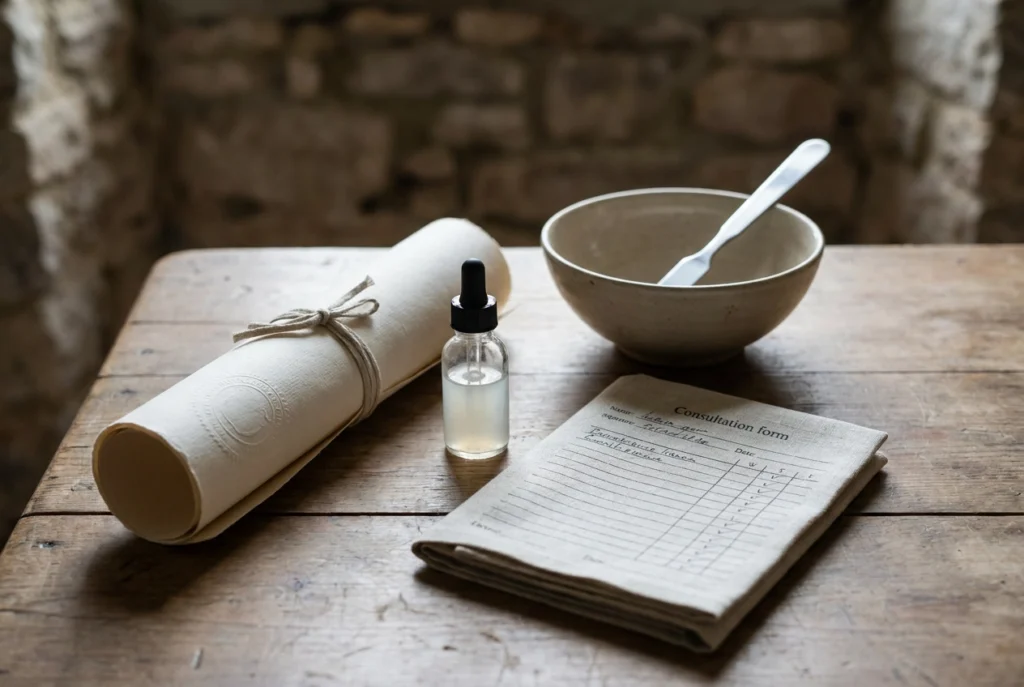
Training tells you what a provider knows. The consultation shows how they think. Before anyone touches your face, expect a real intake: health history, current medications, allergies, and a visual and tactile assessment under good lighting. They should explain what they see in plain language, not trade jargon.
Treat consultation depth as a quality signal you evaluate. New Hampshire rules govern licensing and sanitation, so a thorough intake is best practice you should expect, not a confirmed legal mandate. Ask three questions: What do you see in my skin right now? What is causing this pattern? What will today’s facial accomplish, and what should my skin look like by visit three?
Red flags include jumping straight to packages or product sales, skipping questions about allergies and prescriptions, or guaranteeing a specific result in one session. A corrective plan is phased: calming and barrier support first, actives and extractions later, with home care between visits. Ask how progress will be measured and when they would refer you to a dermatologist or physician. If the answers stay vague, keep looking.
Step 4: Check Sanitation Standards With Your Own Eyes
After the consultation, your next screen is what you can see in the treatment room. A thorough intake means nothing if the room is not clean. New Hampshire’s administrative rules, Chapter Bar 100-700, are the primary source for sanitation requirements. Confirm the specifics there rather than relying on a blog summary, including this one.
In the room, watch for these basics:
- Hands washed or sanitized before touching your face.
- Fresh linens and disposable applicators for each client.
- Tools taken from a closed sanitized container or sterilized between clients.
Extractions should follow skin disinfection and clean technique. If you see bare fingers on active lesions, reused cotton rounds, or a shared spatula dipped straight into a jar, pause and ask.
Ask directly: “How do you disinfect your tools between clients?” and “Is product dispensed with a spatula or with fingers?” Listen for a specific, unhurried answer.
Asking about sanitation is normal and expected. A professional studio answers without defensiveness, and how they respond tells you as much as the words they choose. Once sanitation passes, the last question is whether they treat causes or just cleanse.
Step 5: Decide Whether They Treat Causes or Just Cleanse
Sanitation tells you the room is safe. Treatment philosophy tells you whether your skin will change. A cleansing facial removes surface debris and feels pleasant. A corrective facial targets the mechanism: excess sebum, inflammation, a compromised barrier, or pigment activity. That distinction matters for acne, rosacea, eczema, fine lines, and hyperpigmentation.
Ask what home care they recommend and why. Your skin lives between visits, so a corrective plan without home care rarely holds. Ask how many visits before you should expect visible change, and what happens if you plateau. A real plan has checkpoints and adjustments, not just “book monthly.”
Look for ingredient literacy tied to your concern: barrier support, anti-inflammatory actives, tyrosinase inhibitors, and pH-appropriate exfoliation for your skin type and sensitivity. The skin barrier self-repairs and can become overstressed, so product selection should support that physiology rather than strip it.
Harley Shayna Skin pairs in-studio corrective work with Epicutis skincare, chosen for barrier support and inflammation control. We build plans across visits and adjust as your skin responds. Explore corrective facial services, our facials, or ask about the Facial Forward Fund if cost is a barrier.
Your Question Checklist and Red Flags
Before you book, run through five questions. The answers, plus what you observe in the room, tell you more than any price list.
License. “What is your license number, and what is the studio’s business license?” Then verify both yourself in New Hampshire’s License Lookup. Verbal assurance is not verification.
Training. “What advanced training do you have in acne, rosacea, and hyperpigmentation, and when did you last complete continuing education?” Named certifications and recent dates beat general enthusiasm.
Consultation. “Will you assess and explain my skin before starting, and what is the plan across my next three visits?” If there is no plan, there is no corrective treatment.
Sanitation. “How are tools disinfected between clients, and how are products dispensed?” Watch what happens in the room and compare it with the answer. If the two do not match, leave.
Philosophy and referral. “Do you treat causes or just cleanse, and when would you send me to a dermatologist?” Vague answers are your cue to keep looking.
Red flags that end the conversation: no license number offered, no explanation of what they see in your skin, a rushed or skipped intake, dismissive answers about disinfection, and any promise of a permanent fix in one session.
If a provider crosses a line, the Board accepts written complaints through its public process. You do not need a lawyer to file one.
Conclusion: How to Book a Corrective Facial in Dover, NH
Your checklist is only useful if you put it to work. Before you book any corrective facial in Dover, NH, move through these steps in order.
Verify both licenses first. Look up the esthetician’s individual license and the studio’s business license in the New Hampshire License Lookup. It is free, takes only minutes, and eliminates most of the risk in a single step.
Then ask about training and continuing education. Listen for specifics: named certifications, defined protocols for concerns like acne, rosacea, or hyperpigmentation, and how recently those credentials were renewed. General enthusiasm without documentation tells you very little.
Expect a consultation that explains what the provider actually sees in your skin, followed by a phased plan across multiple visits. That plan should include home care between appointments, since most of your skin’s exposure happens outside the treatment room.
Watch sanitation with your own eyes and ask direct questions about tool disinfection and product dispensing. A professional studio welcomes those questions and answers without deflecting. If a provider avoids them, keep looking.
When you are ready to work with someone who treats causes instead of just cleansing, book a consultation at Harley Shayna Skin in downtown Dover, NH. We will assess your skin, explain what we see, and build a corrective plan with you across visits.